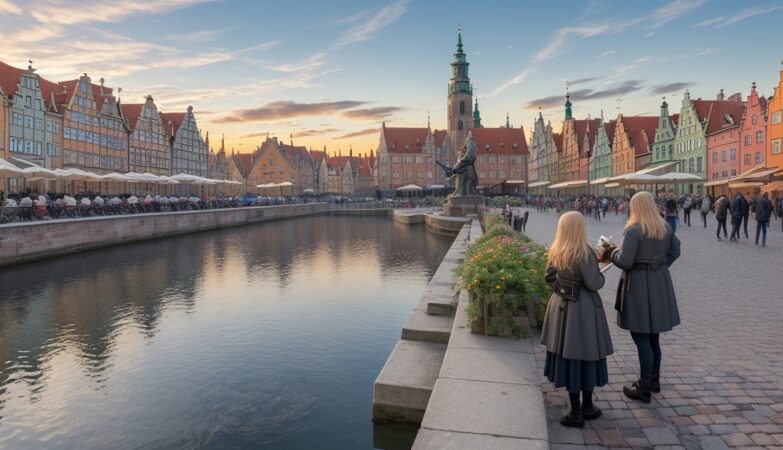
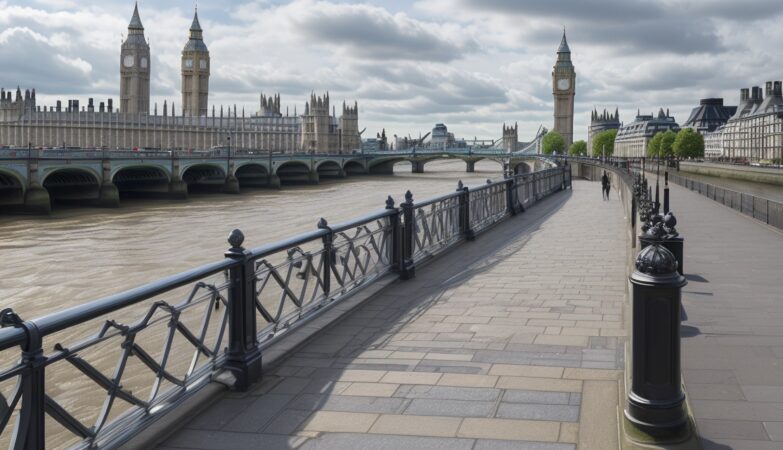
Londonas – vienas įvairiausių ir dinamiškiausių Europos miestų, kuriame istorija susipina su šiuolaikine kultūra, gastronomija…
Years from now, someone might build a traffic system driven by millions of logged human inputs, or AI that learns from live telemetry. But the first great Real Traffic mods will keep their place in the archives not because they were perfect, but because they changed how players understood what a driving sim could be: not an empty stage for heroics, but a world that continues when you are not looking, full of small, vivid decisions that make each run feel alive.
The enthusiasts who pushed this forward did not merely write code. They listened to footage, to weekly commute rhythms, to the small, human choices that make driving less an algorithm and more a conversation between agent and environment. In doing so they taught a generation of sim racers and creators that immersion is cumulative: it lives in tire squeal and in the distant, honest honk of a frustrated driver who will not be hurried.
The social ecosystem is part of the mod’s story. Real Traffic’s authors made deliberate choices about distribution and transparency: changelogs that read like laboratory notes; community issue trackers where contributors pasted telemetry dumps; a public discord where deputy maintainers triaged bugs. This openness built trust and accelerated iteration. It meant the mod did not become a relic. It became collaborative infrastructure — a shared scaffold that other creators leaned on to craft their cityscapes and campaign scenarios.
And then there is longevity. Assetto Corsa’s community has always had a knack for preservation. When a mod becomes foundational — when content creators build scenarios around it, servers depend on it for roleplay, photographers rely on its backdrops — maintainers face a new responsibility: backward compatibility. The Real Traffic team leaned into that, offering migration guides and versioned data formats so that maps and scenarios built for older builds could migrate forward. This engineering discipline turned an enthusiastic hobby into infrastructure reliability.
Beyond the player perspective, there is an ethical and creative edge. Modders who model emergency responses gave rise to evocative scenes: ambulances weaving, police escort patterns that hinted at social structures. It reminded players that a living city in simulation is also an abstraction of systems and priorities. The choice to include or omit certain vehicle types — taxis, delivery vans, mopeds — is a commentary about the world the mod recreates. The best iterations invited optional realism: want to simulate Milan mornings with scooters and tight lane-splitting? There’s a profile for that. Prefer suburban America with pickup trucks and school buses? Toggle it on. The mod’s strength lay in letting players paint their preferred social geography.